





Technology | 23.05.2025
Deep Hole Drilling Technology in the Aerospace Industry
By: Hebert Garza
23.05.2025
Share
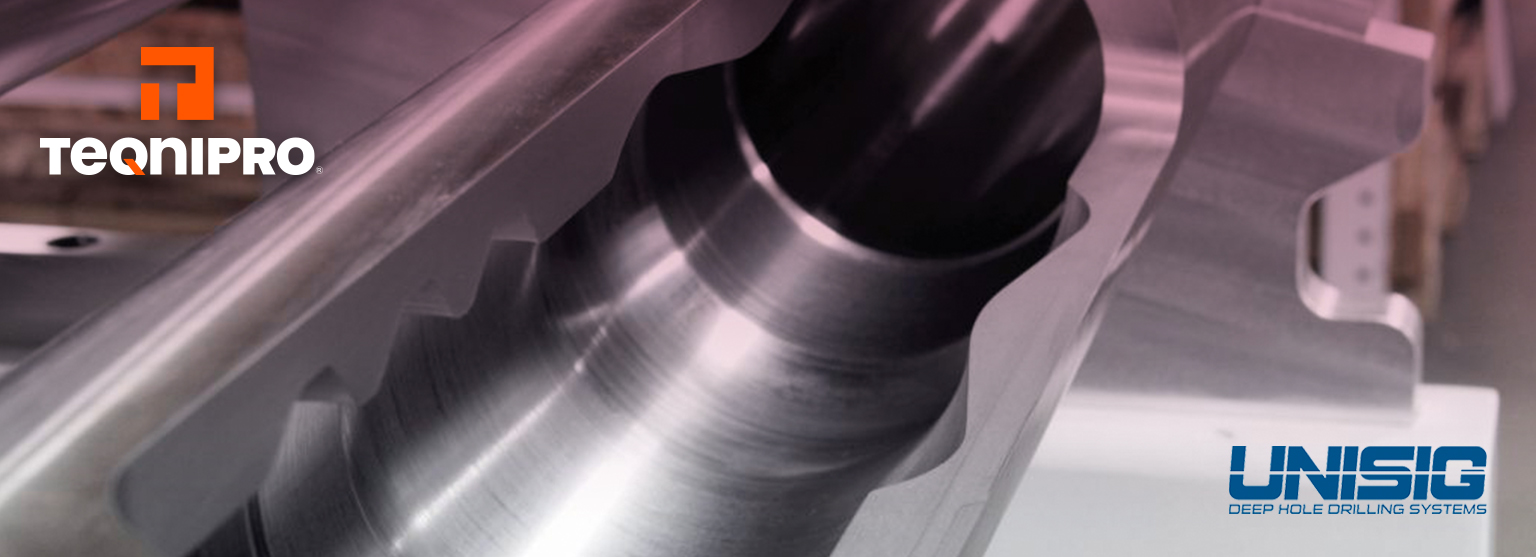
Mexico is experiencing unprecedented growth in the aerospace industry, particularly in the central and northern regions of the country. This growth is being driven, among other factors, by advances in technologies for gun drilling and shaft drilling, as well as deep hole drilling for the manufacturing of components used in commercial and military aircraft.
Deep hole drilling has traditionally been used to manufacture shafts, cylinders, landing gear components, actuators, piston rods, fittings, axles, pins, and fasteners, among many other parts. Although drilling special materials is already common in the industry, many of these materials and components present complex features, such as varying wall thicknesses, stepped holes, or internal contours that make machining more challenging. As a result, manufacturers need equipment capable of performing these processes without compromising the specifications and dimensional accuracy of the tubes.
As market needs evolve, so do customer demands. With every technological advancement, customers require finished components with increasingly tighter precision and tolerance requirements. The aerospace industry is undergoing significant changes driven by growth in many regions around the world, and in Mexico, machining suppliers are expected to meet increasingly demanding requirements. What do these changes mean for the industry?
Traditional Tools vs. Indexable Tools
The fundamentals of the deep hole drilling process remain the same. The process commonly referred to as BTA (Boring and Trepanning Association) drilling has not changed significantly over the years, but the tools used in these processes have improved considerably.
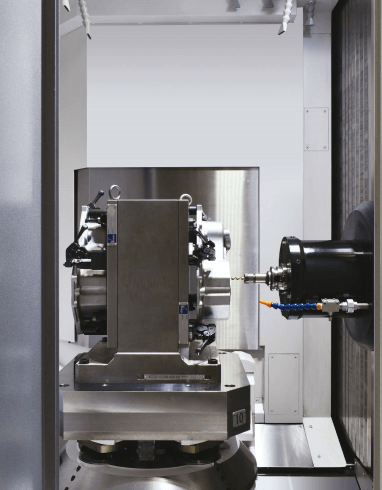
This type of machining requires tools with offset cutting edges to generate sufficient force against the guide pads inside the material. This helps produce more accurate holes while ensuring straightness and precision, as well as facilitating better surface finishes, roundness, and consistency throughout the hole.
Although traditional tools are still widely used, indexable tools—that is, tools with interchangeable cutting tips or inserts—have advanced significantly in terms of carbide grades, coatings, cutting-edge geometry, and improved head designs. These developments increase strength and improve the accuracy of the insert seat and clamping system.
These improvements have made it possible to drill smaller and more precise holes. Indexable tools are also particularly advantageous when special geometries are required in the workpiece and multiple passes are needed to create the final profile.
Often referred to as bottle boring, internal contouring with a CNC-controlled axis is becoming standard practice in deep hole drilling operations.
While this process was once primarily limited to large original equipment manufacturers (OEMs) with the budget and production volume necessary to justify the initial investment, UNISIG now offers standard machine configurations, tooling, and application support that make this technology accessible to manufacturers and machine shops looking to expand their capabilities and offer specialized manufacturing services for the aerospace sector.
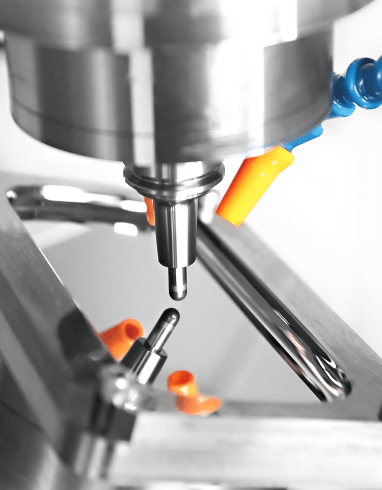
Along with advances in tooling, tool presetting is becoming increasingly important when machining difficult-to-manufacture components. Head setup and geometry measurement can be controlled much more effectively using laser tool presetters or high-resolution cameras. RFID technology automates communication with the CNC controls on UNISIG deep hole drilling and BTA drilling machines, reducing the risk of human error.
New Technologies for the Industry
UNISIG deep hole drilling machines are becoming increasingly precise and capable of producing holes that would be difficult for operators to measure and inspect. This precise, real-time feedback is essential for reliably manufacturing components and provides critical information on vibration, temperature, coolant flow, and pressure. These data points help manufacturers perform better process analysis and continuously improve their operations.
The materials selected for aerospace components are often difficult to machine, including stainless steels, nickel alloys, titanium, and proprietary high-strength alloys. UNISIG equipment is designed to handle these materials, as well as future materials developed for extreme applications.
The machine’s motion control systems—including motors, drives, feedback devices, and high-speed processors—are designed to maintain precise positioning and speed even when materials and cutting tools are operating at their limits.
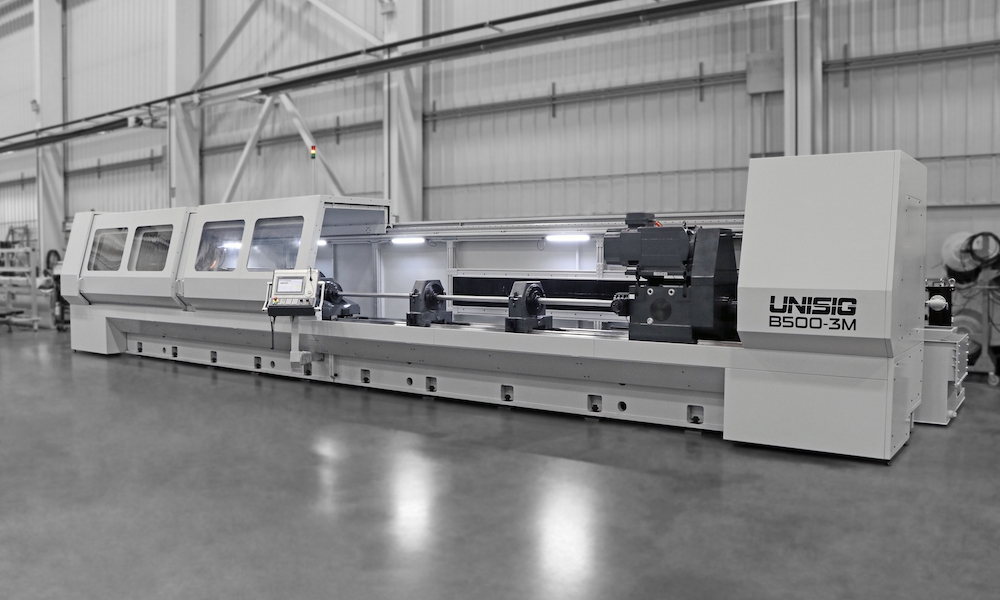
The aerospace industry in Mexico has significant growth potential, particularly for deep hole drilled components. CNC machining centers and multitasking equipment are often used for drilling operations, but specialized deep hole drilling equipment such as UNISIG machines can provide greater versatility and expand the possibilities for your project.
Do not hesitate to contact us for expert guidance on this and other machining processes. Our team can help reduce long cycle times and eliminate manufacturing process issues, helping you achieve more efficient and reliable production.
Related articles
 Thumb blog
Industria
Technology
16.01.2025
YCM L6-M: The CNC Lathe Revolutionizing the Machining of Complex Parts
 Thumb blog
Industria
Technology
16.01.2025
Precisely Powerful: “Exploring Excellence with the Jingdiao GRA400”
 Thumb blog
Industria
Technology
16.01.2025
Transforming Manufacturing with YCM: Innovation and Precision in Every Cut
 Thumb blog
Industria
Technology
16.01.2025
YCM Alliance: Empowering Industries with High-Precision CNC Machining
 Thumb blog
Industria
Technology
16.01.2025
Advantages of the YCM JD316 CNC Machine: A Leap Toward the Future of Machining.
 Thumb blog
Technology
Educación
Educación
07.04.2025
10 Tips to Avoid Collisions on 5-Axis CNC Machines